
HRPC Webinar No.–202 on the Right to Information Act, 2005 Successfully Concluded
News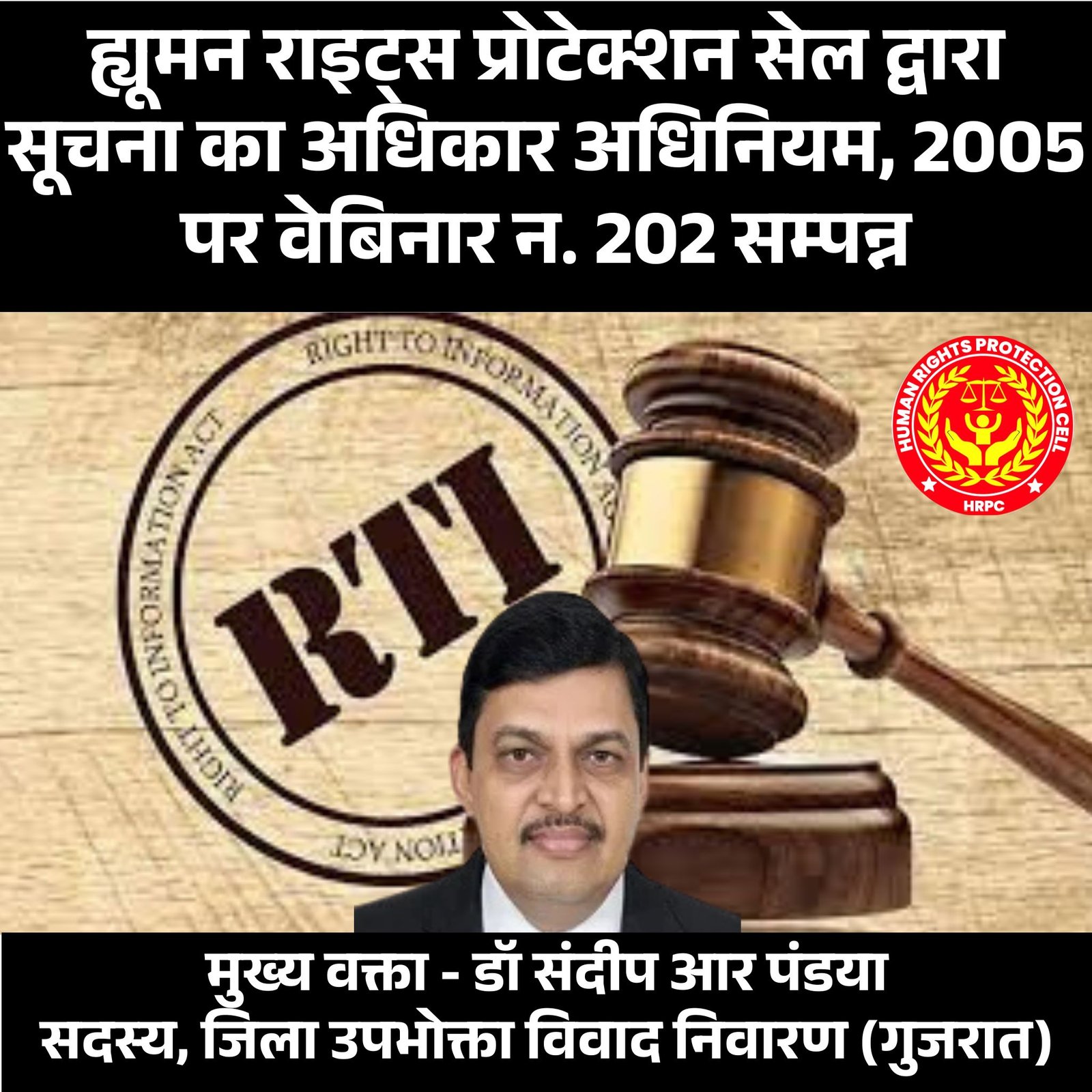
On 20 February 2026 (Friday) at 08:00 PM, Webinar No.–202 on the subject of the Right to Information Act, 2005 was successfully organized in public interest by the Human Rights Protection Cell (HRPC) through the online platform JioMeet. The program was effectively conducted by Mrs. Ranjana Dixit, State President (Legal Cell), Uttar Pradesh. Advocates, law students, social workers, journalists, and aware citizens from across India enthusiastically participated in the webinar and enriched the discussion through their questions, making the session more practical and meaningful.
The keynote speaker of the webinar was Hon’ble Member Judge Dr. Sandeep Kumar Pandya, Member, Kheda District Consumer Disputes Redressal Commission, Gujarat. He elaborated in detail on the fundamental concept of the Right to Information Act, 2005, the procedure for filing applications, the system of first and second appeals, the responsibilities of the Public Information Officer (PIO), prescribed time limits, penal provisions, and the role of RTI in ensuring transparency and accountability in governance.
During the webinar, participants raised several important and practical questions, including whether an RTI application can be sent through email and, if so, what would be the procedure for payment of the prescribed fee; whether enclosing a cash note of ₹10 along with an application sent by post is legally permissible; if the Information Officer fails to provide information within the prescribed time limit, how appropriate and lawful it is to initiate legal action against him; whether an RTI application sent without a signature is considered valid; and whether bank details of the Prime Minister’s Relief Fund or any other government department can be sought under the RTI Act. In addition, participants also sought clarity on the key aspects to be kept in mind during the appeal process and the legally valid grounds for refusal of information.
The Hon’ble speaker satisfactorily addressed all these queries on the basis of statutory provisions and judicial precedents and explained that the Right to Information Act, 2005 provides citizens with a powerful instrument to ensure transparency in governance, but it must be exercised strictly within the framework of lawful procedures and limitations.
The Human Rights Protection Cell (HRPC) believes that the Right to Information forms the foundation of a strong democracy, enabling citizens to actively participate in the governance system and ensuring accountability. Such legal awareness programs play a significant role in strengthening constitutional values, human rights, and the Rule of Law in society. HRPC will continue to organize such informative and empowerment-oriented programs in public interest in the future as well.